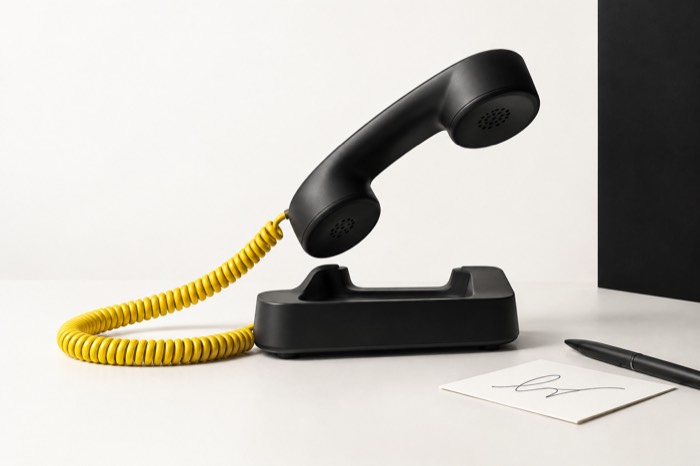
Missed calls don't leave voicemails. They call your competitor.
People aren't shopping for the best business — they're shopping for the first one that answers. This answers on the first ring, nights and weekends included, books the appointment, texts the confirmation, and sends you the summary.

Don't take my word for it. Call it right now.
(912) 254-4358That number is answered by the exact product this page sells. Ask it what FWA does, what an AI receptionist costs, or anything else. Then imagine it answering for your business.
The Math
The leak is bigger than it feels.
A missed call doesn't feel like lost money. It feels like a number you'll call back after lunch. Owners who actually track them tell a different story:
1 in 3
callers leave a voicemail
The other two hang up and dial the next result. Voicemail isn't a backstop. It's where the lead goes to die.
30–40%
of calls land after hours
Evenings and weekends, when homeowners finally have time to deal with the thing, and when nobody's at your phone.
$300–500
per missed call, in the trades
What owners who track their missed calls say each one costs them. Bigger jobs, bigger number.
Those aren't my numbers. I only publish what I can verify, and these are what business owners report when they audit their own phones. So run yours: your average job, times the calls that ring out in a week. That's the leak this plugs.
Where It Fits
It replaces your voicemail. Not you.
Nobody gets fired and nobody gets hidden from. It answers the calls that were already getting missed, and you choose how far that goes:
After hours
You run your day exactly as you do now. It takes nights, weekends, and holidays: the calls that were going to voicemail anyway.
Overflow
You answer when you can. When you're on a ladder, with a customer, or on the other line, it picks up before the caller gives up.
Front line
It answers everything first: screens the spam, books the routine, and passes you the calls that actually need you, live.
And if you already answer every call? Then you don't need this. It earns its keep on the calls that ring out, not the ones you're catching.
The call ends booked, not "noted."
The version of this people hate is voicemail with extra steps: a bot that chats for a minute and then... takes a message. Here's what one call looks like instead:
It answers on the first ring
No hold music, no "your call is important." A natural voice that says it's an AI assistant and asks how it can help.
It asks what you'd ask
What's going on, where, how soon. It knows your services, hours, service area, and pricing, because I configure it from how you actually work.
It reads the details back
Names, numbers, addresses. Confirmed with the caller before the call ends, not guessed at afterward. The full recording is kept either way.
It books the job
A real slot on your real calendar, not "someone will call you back."
The caller gets a text
A written confirmation lands in their pocket before they can dial your competitor. As far as they're concerned, it's handled.
You get everything
A summary with who called, their number, and what they need, with the full transcript and recording behind it.
And if they say "can I talk to a person?"
It transfers. Mid-call, to you or whoever you choose, with a quick spoken brief first so you pick up already knowing the caller and the reason. It doesn't argue, it doesn't loop, and if nobody can answer, it takes a real message and flags it, not a second voicemail.
Booking, transfers, and texts are configured per build, around your calendar, your tools, and how your business actually runs.
The Rules
Two rules keep callers on the line.
It says it's an AI. First sentence.
No human name, no fake keyboard sounds, no office chatter track. People forgive a robot for being a robot; they don't forgive it for pretending. That rule is written into FWA's privacy policy, and I won't configure around it.
There's always a way out.
"Talk to a person" works every time: no arguing, no phone-tree maze, no answering three more questions first. The fastest way to make someone hate a bot is to trap them in one, so this one holds the door open.
"But my customers are older."
Owners who've run one say age isn't the split: older callers treat it like an answering machine that talks back, a technology they've been ready for since 1985. What callers of every age punish is a bot that can't actually do anything. This one books.
The parts nobody advertises.
It eats the spam
Robocalls and cold pitches get a polite goodbye without ringing your pocket. Your callback list stays human.
It's never busy
Three callers at once on a Saturday morning? All three get answered. Nobody hears a busy signal or waits on hold.
It never gets bored
The tenth "are you open Saturday" of the day gets the same patient, accurate answer as the first.
This is for you if…
- Your phone rings while you're on a ladder, with a patient, or under a sink
- You've called back a missed number and heard "oh, we found somebody else"
- After-hours callers get voicemail, and voicemail gets nothing
- You're a one-person operation and the phone is the interruption you can't afford, or ignore
Every call gets answered, so every lead gets captured. You work without watching the phone, and you end the day with a record of who called, what they wanted, and who needs a callback, instead of a missed-call list and a guilty feeling.
The Proof
I sell this because I use it.
Francis Web Agency's own phone line, and the demo line above, are answered by the exact system on this page. It picks up while I'm building, driving, or asleep, and every call lands in the same inbox I check each morning: summarized, transcribed, recorded. Nothing on this page is a feature I haven't lived with.
How it gets set up.
Configure
I learn your business: services, hours, pricing, calendar, transfer rules, the questions callers actually ask. The receptionist gets built around your answers.
Connect
A new number, or your existing number forwarded. Your customers dial what they always dialed.
Test together
We call it, poke at it, and tune it until it handles your real calls the way you would.
Live + tuned
"Set and forget" is the part other vendors lie about. Tuning is the service: as real calls come in, it gets sharper. Included in the monthly, not an extra invoice.
Pricing
Cheaper than every alternative. Including doing nothing.
Voicemail is free, and two out of three callers won't use it. A live answering service runs a few hundred a month to take a message you still have to return. A receptionist is a salary, and the phone still rings at 9 p.m.
Setup
$150 one time
Configuration, number connection, testing, and go-live.
Monthly service
from $50/mo
Based on call volume. Includes the phone number, answering, booking, call summaries, and ongoing tuning. Cancel anytime.
No long contract, no per-minute mystery math. If your call volume changes, the plan changes with it, and you'll hear that from me before it's on an invoice. Do the math from the top of this page: one caught job tends to cover a lot of months.
You're not buying a login.
The SaaS version of this is a dashboard, a setup wizard, and a YouTube tutorial. This is the other kind: the developer who builds websites for a living builds your phone line, configures it around your business, tests it with you, and keeps tuning it as real calls come in. When something should change, you text me.
Calls come from somewhere, usually a website. Web Design makes it one worth calling from. SEO gets the phone ringing in the first place.
In the area? The local pages: Albany, Valdosta, Savannah, Hinesville, and Tallahassee.
Fair questions.
No. It says it's an AI assistant in its first sentence, on every call. People forgive a robot for being a robot; they don't forgive it for pretending. That rule is written into FWA's privacy policy, and I won't configure around it.
Stop losing the calls you never heard ring.
Call the demo, then let's set one up for your line: configured, tested, and answering within days.